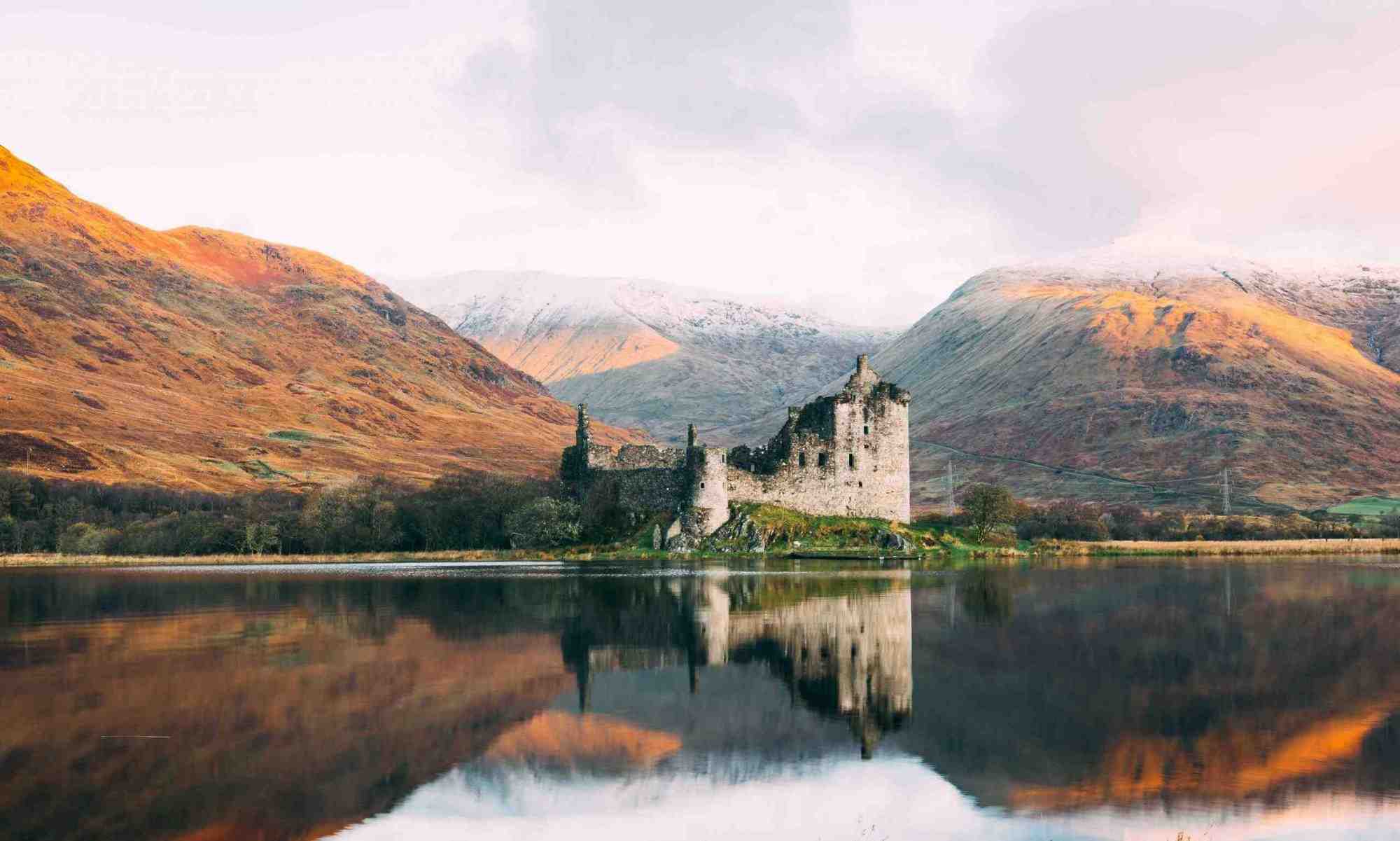


Loch Lomond is the largest lake by surface area in Great Britain and the scenic jewel on Glasgow’s doorstep – a vast, island-dotted expanse of water framed by wooded hills and Highland peaks. Together with the wild glens and lochs of the neighbouring Trossachs, it forms Loch Lomond and The Trossachs National Park, often called “the Highlands in miniature.” This guide covers the best things to do, the prettiest villages, the top walks and cruises, how to get there and where to stay.
About Loch Lomond and The Trossachs
Designated in 2002 as Scotland’s very first national park, Loch Lomond and The Trossachs protects around 720 square miles of lochs, forests, glens and mountains. The loch itself stretches roughly 22 miles north to south and is sprinkled with more than 30 islands. The Highland Boundary Fault runs right across it, which is why the southern end is broad, low and gentle while the northern end narrows into steep, dramatic Highland scenery. That variety – lowland calm meeting Highland drama in a single view – is exactly what makes the park so special, and so accessible.
How to get there
- From Glasgow: Balloch, at the loch’s southern tip, is under an hour away by car and has a direct train from Glasgow – making Loch Lomond one of the easiest Highland-style escapes in Scotland, even without a car.
- By car: the A82 runs up the scenic western shore towards Tarbet, Crianlarich and on to Glencoe and Fort William.
- By tour: countless day tours from Glasgow and Edinburgh include Loch Lomond, often paired with the Trossachs or Stirling.
Top things to do at Loch Lomond
Take a loch cruise
Getting out on the water is the classic Loch Lomond experience. Cruises and water-bus services run from Balloch, Balmaha, Luss and Tarbet, ranging from short sightseeing trips to island-hopping excursions – the best way to appreciate the loch’s scale and its wooded islands.
Explore Luss
The conservation village of Luss, on the western shore, is impossibly pretty: rows of 19th-century cottages, a sandy bay, a pier for cruises and grand views across the water. It’s the most popular village on the loch – arrive early in summer to beat the crowds.
Climb Conic Hill
Rising above Balmaha on the eastern shore, Conic Hill is a relatively short but rewarding climb that sits right on the Highland Boundary Fault. From the top you can clearly see the line of islands marking the fault and enjoy one of the finest panoramas over the loch – a perfect introduction to Highland hiking.
Conquer Ben Lomond
For a bigger challenge, Ben Lomond (974 m) is the most southerly Munro and one of the most popular mountains in Scotland. The well-trodden path from Rowardennan rewards fit walkers with sweeping views over the loch and beyond – a full-day hike for the properly prepared.
Loch Lomond Shores and Balloch
At the southern gateway, Balloch and the Loch Lomond Shores complex offer an aquarium, shops, boat hire, Balloch Castle Country Park and easy waterside strolls – a good family base, especially in changeable weather.
Discover the islands
The loch’s islands range from tiny skerries to Inchcailloch, a nature reserve with woodland trails reachable by a short ferry from Balmaha, and Inchmurrin, the largest freshwater island in the British Isles.
The Trossachs
East and north of the loch lies the Trossachs, a romantic landscape of smaller lochs, forests and craggy hills that inspired Sir Walter Scott and was once the territory of the outlaw Rob Roy MacGregor. Highlights include:
- Loch Katrine – cruise its serene waters aboard the historic steamship Sir Walter Scott, or cycle the traffic-free shore road.
- Aberfoyle and the Duke’s Pass – a charming village and a spectacular scenic drive through forested hills, with the Lodge Forest Visitor Centre and treetop adventure courses nearby.
- Callander – a bustling Trossachs town and gateway, good for shops, cafes and walks like Bracklinn Falls.
Walking and cycling
The park is a walker’s paradise. The famous West Highland Way runs along the loch’s eastern shore between Drymen and Crianlarich, offering superb day-walk sections. Cyclists can follow the largely traffic-free West Loch Lomond Cycle Path from Balloch to Tarbet, while gentler trails web the forests of the Trossachs. There’s something here for every level, from buggy-friendly strolls to multi-day expeditions.
Best time to visit
Late spring and early autumn bring fine colour, fewer crowds and fewer midges than mid-summer, when the park is at its busiest (and Luss and Balloch can be packed at weekends). Autumn is especially lovely as the woodlands turn gold. Many attractions and cruises are seasonal, so check ahead in winter, when the park is quiet, atmospheric and often dusted with snow on the higher peaks.
Where to stay
Balloch and Luss are convenient lochside bases near Glasgow; Tarbet and Arrochar suit those heading further north; and Callander or Aberfoyle put you in the heart of the Trossachs. Options range from grand lochside hotels to cosy inns, B&Bs, campsites and lodges. Browse our Scotland accommodation guide.
A day trip from Glasgow
Loch Lomond is the ideal day trip from Glasgow: drive or take the train to Balloch, enjoy a loch cruise, lunch in Luss and a short walk up Conic Hill, and you’re back in the city by evening. With a car you can easily add a loop through the Trossachs via the Duke’s Pass.
Combine your visit
Loch Lomond pairs naturally with Glasgow and Stirling, and sits right on the main route north – continue up the A82 to Glencoe and Fort William for a classic Highlands road trip. See our full Highlands guide.
A landscape shaped by a fault line
Loch Lomond’s distinctive split personality is the work of the Highland Boundary Fault, the great geological dividing line between the Scottish Lowlands and Highlands, which crosses the loch from Balmaha through its string of southern islands. South of the fault the land is gentle and pastoral and the loch is wide and shallow; north of it the shores close in steeply and the scenery turns rugged and mountainous. The same fault gave rise to the chain of wooded islands, several of them cloaked in ancient oak woodland that bursts with bluebells in spring. The park is rich in wildlife too – look out for ospreys fishing in summer, red squirrels in the forests, and herons and otters along the quieter shores.
Water sports and on-the-water activities
Loch Lomond is one of Scotland’s premier playgrounds for watersports. You can hire kayaks, canoes and stand-up paddleboards at Balloch, Balmaha and Luss, try sailing or windsurfing, or take a thrilling powerboat or speedboat tour. Seaplane flights even take off from the loch for a bird’s-eye view of the islands and surrounding Munros. For something gentler, the water-bus network lets you hop between villages and islands by boat, turning the loch itself into your transport.
Loch Lomond with kids
The park is wonderfully family-friendly. Loch Lomond Shores at Balloch has an aquarium, a small beach, bike and pedalo hire and easy waterside paths, while the gentle ferry to Inchcailloch island feels like an adventure for little ones. Short walks such as the Balmaha shoreline, the Lodge Forest trails near Aberfoyle, and the treetop adventure courses in the Trossachs keep older children entertained – all without the long drives that other Highland destinations demand.
Frequently asked questions
Is Loch Lomond worth visiting?
Absolutely – it offers Highland scenery, pretty villages, loch cruises and excellent walks within easy reach of Glasgow, making it one of the most rewarding and accessible escapes in Scotland.
How far is Loch Lomond from Glasgow?
Balloch, at the southern end, is under an hour from Glasgow by car or direct train.
What are the best things to do at Loch Lomond?
Take a loch cruise, visit the village of Luss, climb Conic Hill or Ben Lomond, explore the islands, and venture into the Trossachs to cruise Loch Katrine.
Can you swim in Loch Lomond?
Yes – wild swimming is popular, especially at sandy spots like Luss and Milarrochy Bay, but the water is cold year-round and depths drop quickly, so take sensible precautions.
How many days do you need at Loch Lomond?
You can enjoy the highlights on a single day trip from Glasgow, but staying one or two nights lets you combine a loch cruise, a hill walk and a proper exploration of the Trossachs at a relaxed pace, and to catch the loch in the beautiful early-morning and evening light when the day-trippers have gone.
Loch Lomond or Loch Ness – which should I visit?
Loch Lomond is far closer to Glasgow and better for cruises, villages and walks; Loch Ness, much further north, is about the monster legend and Urquhart Castle. If you have time, they sit on different routes and both are worth seeing.
What is the difference between Loch Lomond and the Trossachs?
Loch Lomond is the great loch on the western side of the national park; the Trossachs is the hillier area of smaller lochs and forests to its east – both lie within the same national park.
Header image: Gustave Doré, Public domain, via Wikimedia Commons