
What To Do in Scotland
Scotland packs an improbable amount into a country roughly the size of South Carolina: around 900 islands, more than 280 Munros, over 2,000 castles in various states of ruin, 140-odd working whisky distilleries, two national parks, six UNESCO World Heritage Sites and the busiest arts festival on the planet. This page is the starting point – the things worth doing, organised by the kind of trip you want – and the searchable directory below lists attractions, distilleries, restaurants and places to stay across the country.
Castles and history
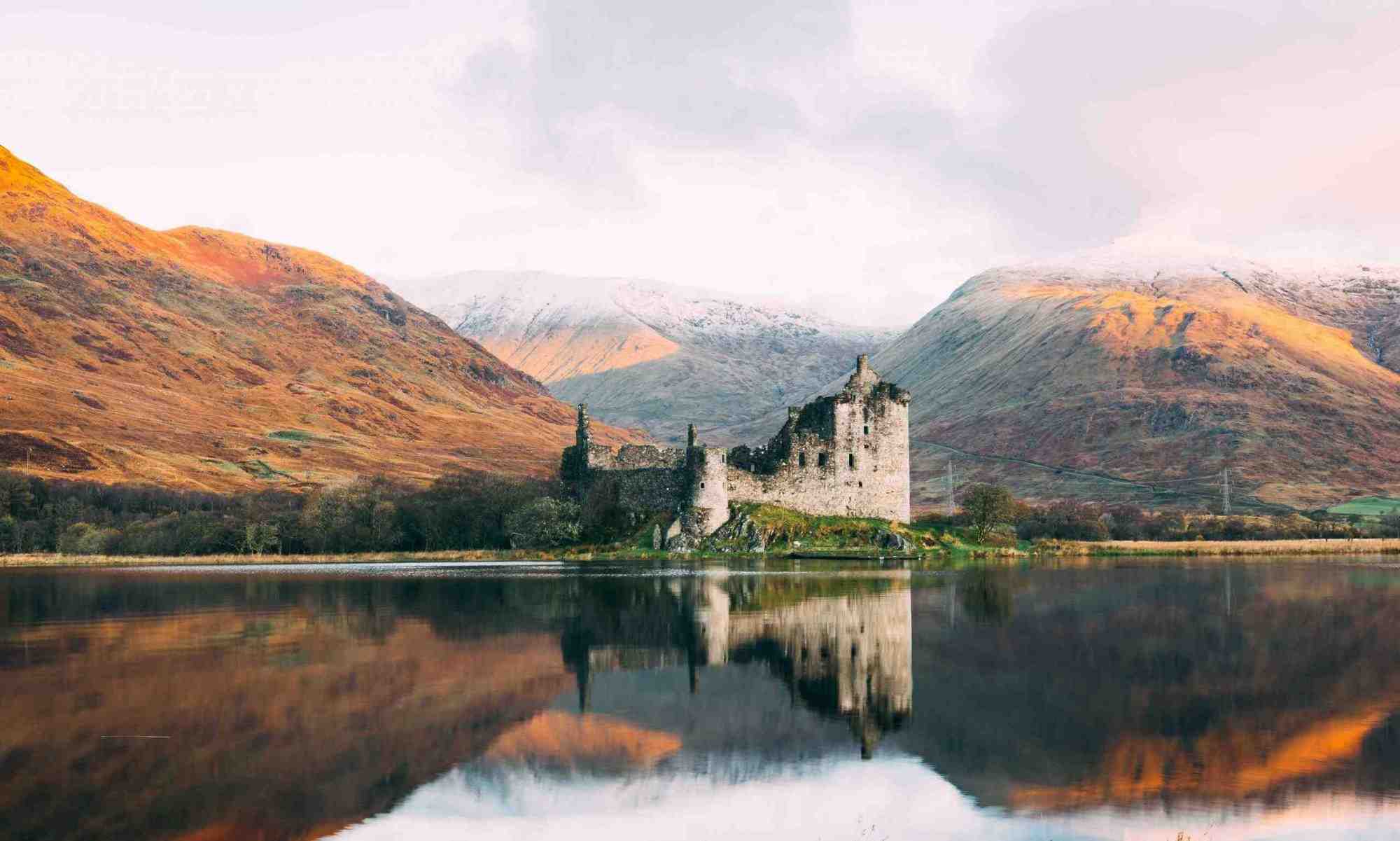
Castles are the obvious place to start, and Scotland has every variety: royal fortresses still in use, clifftop ruins, tower houses, and Victorian fantasies built by people with more money than restraint. Edinburgh Castle on its volcanic rock and Stirling Castle above the Forth carry most of the national story between them. Linlithgow Palace, the birthplace of Mary Queen of Scots, is roofless and all the better for it. Blackness Castle juts into the Forth like a stone ship. Castle Campbell sits at the head of a wooded glen in the Ochils, and the Palace of Holyroodhouse anchors the bottom of Edinburgh’s Royal Mile.
Our roundup of the best castles in Scotland covers the ones worth crossing the country for, and the best castles in Argyll narrows it to the west coast.
Beyond castles, the history runs deeper than the tartan version suggests: the Neolithic villages of Orkney, Kilmartin Glen with its cairns and rock art, the Roman frontier of the Antonine Wall, the battlefield at Culloden, and the industrial heritage of the Clyde and the Forth.
Whisky
Scotch whisky is a reason to visit in itself, and distillery tours have become far more sophisticated than the old walk-round-and-a-dram. The regions each have a character: Speyside for elegance and sheer concentration of distilleries, Islay for peat and Atlantic weather, the Highlands for variety, the Lowlands for lighter styles within reach of the cities, and Campbeltown for a tiny region with an outsized reputation.
Start with our Scotch whisky guide, then the best distilleries to visit and 27 best single malts. If you are driving between distilleries, remember Scotland’s drink-drive limit is lower than England’s – take the driver’s dram home in a sample bottle, which every distillery will provide.
Islands
The islands are where Scotland stops looking like anywhere else. Skye is the famous one, with the Cuillin, the Quiraing and the crowds to match. Islay combines nine working distilleries with enormous beaches and wintering geese. Mull has eagles, otters and a painted seafront, and is the stepping stone to Iona and Staffa’s Fingal’s Cave. Quieter alternatives include Gigha, Colonsay, Tiree and Lismore. Further north, Orkney and Shetland in the Northern Isles are a different country again, Norse rather than Gaelic.
Not sure which to pick? Our comparisons of Islay, Jura or Mull and Mull or Skye are built for exactly that decision. Ferries need booking well ahead in summer if you are taking a car.
Walking and the outdoors
Scotland’s access legislation gives you the right to walk almost anywhere responsibly, which makes it one of the best countries in Europe for getting outdoors. The options scale from a level path round a loch to a week on the hill:
- Long-distance routes – the West Highland Way from Milngavie to Fort William is the classic, with the Great Glen Way, the Fife Coastal Path and the Speyside Way close behind.
- Munro bagging – the 282 Scottish peaks over 3,000 feet, with Ben Nevis the highest. Serious mountain terrain and serious weather; go prepared.
- Glens and lochs – Glencoe for scale, Loch Lomond for accessibility, and the rest in our guide to the most beautiful lochs in Scotland.
- The Cairngorms – Britain’s largest national park, with the country’s best chance of snow, reindeer, ospreys and ancient pinewood. See the Cairngorms.
- Beaches – genuinely world-class and usually empty. The beaches of Argyll and the Hebrides are white sand and turquoise water, if you can cope with the temperature.
Wildlife
Scotland is the best place in Britain for wildlife watching. Red deer are everywhere in the Highlands; golden and white-tailed eagles are reliable on Mull and Skye; puffins crowd the sea cliffs from May to July; dolphins are regular in the Moray Firth; and minke whales and basking sharks appear off the west coast in late summer. Boat trips from Oban, Mull and the Northern Isles are the easiest way in, and the Scottish Seabird Centre at North Berwick puts the Bass Rock gannet colony on a live camera feed.
Road trips
Driving is how most people see Scotland, and a handful of routes have become destinations in themselves. The North Coast 500 loops 500 miles round the far north from Inverness; the Kintyre 66 is its quieter Argyll cousin; and the road through Glencoe to Glenfinnan and the isles is the one that turns up in films.
Before you set off, read driving in Scotland – single-track road etiquette, passing places, fuel gaps in the north-west and the lower drink-drive limit all catch visitors out. No car? Scotland without a car shows how far the train, bus and ferry network will take you.
Cities
Edinburgh is the obvious start: castle, Old Town, Royal Mile, Arthur’s Seat and the world’s biggest arts festival every August. Glasgow, fifty minutes away by train, is bigger, grittier and better for music, architecture and eating out. St Andrews has the golf and the ruins, Inverness is the gateway to the Highlands, and Aberdeen, Dundee, Stirling and Perth all repay a day.
Our lists of the best things to do in Edinburgh and the Royal Mile cover the capital in detail.
Festivals and events
August in Edinburgh means the Festival Fringe, the International Festival, the Book Festival and the Military Tattoo running simultaneously – extraordinary, and the single busiest time of the Scottish year. Hogmanay is the other headline event, with street parties, fireworks and the Loony Dook at South Queensferry on New Year’s Day. Through the summer, Highland Games take place in towns and villages across the country, and are far more fun than the postcards suggest. Rugby internationals fill Edinburgh for Six Nations weekends in February and March.
Food and drink
Scottish food has improved beyond recognition. Seafood is the strength – langoustines, scallops, oysters, crab and salmon, much of it landed on the west coast – and it is best eaten within sight of where it was caught, as in Oban. Beef, game and cheese are all excellent, haggis is better than its reputation, and the country now has a serious fine-dining scene: see our guide to Michelin-starred restaurants in Scotland, or browse the restaurants directory.
Film and TV locations
Two franchises drive a great deal of Scottish travel. Harry Potter locations centre on the Glenfinnan Viaduct and the Jacobite steam train, with Edinburgh’s Old Town supplying the atmosphere. Outlander locations are scattered across the central belt and the Highlands, with Blackness, Linlithgow, Doune and Culross all appearing. Both make good routes in their own right.
How long do you need?
Five days covers Edinburgh, Glasgow and a taste of the Highlands. Seven to ten days lets you add the west coast and an island without living in the car. Two weeks gets you the islands and the far north properly. Our itineraries hub has route-by-route plans, including 7 days, 10 days and 5 days, and how many days you need in Scotland answers the question directly.
For the practicalities – when to come, what it costs, what to pack – see planning a trip to Scotland, the best time to visit and Scotland’s currency. When you are ready to book a bed, our accommodation guide covers hotels, B&Bs, hostels and campsites.
Golf
Golf was invented here, and Scotland has more courses per head than anywhere on earth. The Old Course at St Andrews is the headline – it runs a daily ballot for tee times, and non-golfers can walk the course on Sundays, when it closes to play. Beyond it lie Carnoustie, Muirfield, Turnberry, Royal Dornoch and Machrihanish, plus hundreds of links and parkland courses where a round costs a fraction of the famous names. Many small-town clubs welcome visitors with no fuss at all.
Gardens and the west coast
The Gulf Stream gives Scotland’s west coast a mild, wet climate that supports gardens no one expects at this latitude: palms, tree ferns and rhododendrons at Inverewe in Wester Ross, Logan Botanic Garden in Dumfries and Galloway, Crarae on Loch Fyne and Benmore in Argyll. The Royal Botanic Garden in Edinburgh is free to enter and one of the finest in the world.
Scotland with children
Castles do a lot of the heavy lifting, but there is plenty built specifically for families: Blair Drummond Safari Park near Stirling, the Falkirk Wheel boat lift, the Kelpies, the Jacobite steam train over the Glenfinnan Viaduct, Dynamic Earth and the Edinburgh Dungeon in the capital, and boat trips to see puffins and seals almost everywhere on the coast.
What to do when it rains
It will rain. Scotland’s museums are unusually good and unusually free: the National Museum of Scotland in Edinburgh, Kelvingrove and the Riverside Museum in Glasgow, the V&A in Dundee and the Hunterian all cost nothing to enter. Distillery tours are indoor by definition. So are the Falkirk Wheel visitor centre, Callendar House, and most castles. A wet afternoon is also the best possible excuse for a long lunch and a whisky flight.
Free things to do
Scotland can be an expensive country, but a great deal of the best of it costs nothing. National museums and galleries are free. So are the hills, the coast, and every mile of the Antonine Wall. Arthur’s Seat, the beaches of the Hebrides, the Ring of Brodgar, most waterfalls and viewpoints, and the majority of Scotland’s coastline are open access and free to walk.
Getting around responsibly
Scotland’s Outdoor Access Code gives you the right to walk, cycle and camp responsibly across most unenclosed land – a right that does not exist in England and Wales. It comes with obligations: leave gates as you find them, keep dogs under control near livestock and ground-nesting birds, take litter home, and camp in small numbers well away from buildings and roads. On single-track roads, use passing places to let faster traffic overtake as well as to pass oncoming vehicles, and never park in one.
Music, books and the arts
Traditional music is alive rather than preserved. Sessions run in pubs in Edinburgh, Glasgow, Inverness, Oban and across the islands, usually free and usually spontaneous, and the folk festival calendar runs from Celtic Connections in Glasgow each January through to island festivals in the summer. Glasgow is a UNESCO City of Music with a live scene out of proportion to its size; Edinburgh is a UNESCO City of Literature, with a writers’ museum, a book festival every August and a literary history running from Burns and Scott through Stevenson to Rankin and Welsh. Our page on books linked to Scotland is a good place to start reading before you travel.
Language
You will hear three languages in Scotland. English is universal. Scots – heard in everyday speech across the Lowlands and the north-east – supplies a great deal of the vocabulary visitors find puzzling. Gaelic survives as a community language mainly in the Hebrides, and appears on road signs across the Highlands and Islands. Nobody expects visitors to speak either, but knowing that ben is a mountain, loch a lake, glen a valley, kyle a strait and inver a river mouth will make the map suddenly readable.
Where to start if it is your first visit
If this is your first trip and the list above is overwhelming, the standard first-time route works for good reason: two or three days in Edinburgh, a day in Glasgow, then three or four days heading north through Stirling, Glencoe and Fort William to Skye or Inverness, with a distillery and a castle or two along the way. Everything else on this page is what you come back for.
Browse attractions and places
Use the directory below to search attractions, distilleries, restaurants, hotels and campsites by category and location, or explore them on the map.