

Last updated: July 2026
Kilmartin Glen, in the heart of Argyll, is one of the most remarkable — and most overlooked — ancient landscapes in Britain. Within a few miles around the little village of Kilmartin lie around 800 prehistoric and historic monuments: standing stones, stone circles, burial cairns, mysterious rock carvings and an ancient royal fortress that was the very cradle of Scotland. Yet it draws a fraction of the visitors of better-known sites like the Callanish stones or Orkney’s Neolithic wonders — which makes exploring it, often alone, all the more magical.
Where is Kilmartin Glen?
Kilmartin Glen lies in Argyll, just north of Lochgilphead and a short drive from the Crinan Canal, on Scotland’s west coast. It is roughly an hour south of Oban and around two hours from Glasgow. The monuments are spread along the glen and across the surrounding hills, so a little planning (and the museum) helps you make sense of what you are seeing.
A landscape of standing stones and cairns
The glen’s centrepiece is a linear cemetery — a line of five great Bronze Age burial cairns running along the valley floor, some of which you can enter to see the stone burial chambers within. Alongside them stand the Nether Largie standing stones and the twin stone circles of Temple Wood, parts of which date back more than 5,000 years. Wandering between them on a quiet day, with the hills all around, gives a powerful sense of deep time.
Prehistoric rock art
Scattered across rock outcrops in the area are enigmatic cup-and-ring marks — prehistoric carvings of concentric circles and hollows whose meaning is still debated by archaeologists. The best-known are at Achnabreck and Cairnbaan nearby, among the finest examples of prehistoric rock art in Britain. Seeking them out adds a real sense of discovery to a visit.
Dunadd: the cradle of Scotland
Rising abruptly from the boggy plain of the Moine Mhor is Dunadd, a rocky hillfort that was the royal capital of Dál Riata, the early medieval kingdom of the Scots who gave their name — and their kings — to Scotland. Near the summit you can still see a carved footprint and basin, thought to have been used in the inauguration ceremonies of its kings, along with an ancient ogham inscription. Climbing Dunadd, and placing your own foot in that 1,300-year-old footprint, is one of the most moving experiences in Scottish history.
Kilmartin Museum
The award-winning Kilmartin Museum, extensively redeveloped and reopened in 2023, is the essential starting point for any visit. It brings the glen’s astonishing archaeology to life with world-class displays, helps you understand and locate the monuments out in the landscape, and has an excellent café and shop. Start here, then head out to explore.
Carnasserie Castle and Crinan
Just up the road stands the atmospheric ruin of Carnasserie Castle, a 16th-century tower house that is free to visit, rarely busy and offers fine views over the glen (see our best castles in Argyll guide). Nearby, the Crinan Canal — “Britain’s most beautiful shortcut” — makes a lovely add-on, with towpath walks and the pretty basin at Crinan.
Why Kilmartin is so underrated
Kilmartin Glen has as much archaeological importance as many world-famous sites, yet because it lies off the main tourist routes and its monuments are spread across the countryside rather than concentrated in one ticketed attraction, it remains gloriously quiet. For anyone interested in history, prehistory or simply atmospheric landscapes, it is one of Scotland’s great hidden gems.
Visiting: practical tips
- Start at the museum to orient yourself and pick up a map of the monuments.
- Most outdoor sites are free and open access, reached by short walks.
- Wear sturdy, waterproof footwear — the ground, especially at Dunadd and the Moine Mhor, can be boggy.
- Allow at least half a day, ideally a full day, to do it justice.
- Combine with Carnasserie Castle and Crinan for a rich day out.
Getting there and when to visit
Kilmartin is on the A816 between Lochgilphead and Oban, easily reached by car; bus services run along the route for those without one. Any time of year rewards a visit, though late spring to autumn offers the best weather and the museum and café at full swing. Fit it into a wider Argyll trip with our Scotland itineraries.
Understanding the wider landscape
What makes Kilmartin so special is not any single monument but the sheer density and continuity of them. Over roughly 5,000 years, from Neolithic farmers to the kings of Dál Riata, people chose this glen to bury their dead, mark the land and establish power. Standing at Temple Wood or on the summit of Dunadd, you are looking at layer upon layer of human history in one small, sheltered valley — a rare thing anywhere in Europe. Taking the time to visit several sites in sequence, ideally after a briefing at the museum, turns a series of stones into a genuinely moving story.
Crinan Canal and Knapdale
Just west of Kilmartin, the pretty Crinan Canal cuts across the neck of the Kintyre peninsula, saving boats the long and dangerous voyage round the Mull of Kintyre. A walk along the towpath to the little harbour at Crinan, with its yachts and views out to the isles, makes a lovely, gentle complement to a morning among the standing stones. Nearby Knapdale is famous as the site of Scotland’s first beaver reintroduction — with patience and luck you may spot signs of these industrious animals in the lochs and woods.
Making a day of it
Kilmartin rewards an unhurried visit. Start at the museum, walk the linear cemetery and Temple Wood, seek out the cup-and-ring rock art, and climb Dunadd for the views and that ancient footprint. Add Carnasserie Castle and a stroll along the Crinan Canal, with lunch at the museum café or in Lochgilphead, and you have one of the most rewarding — and least crowded — days out in all of Argyll.
This guide is part of our complete Argyll & the Isles travel guide — browse islands, itineraries, distilleries, beaches and castles across the region.
Frequently asked questions
What is Kilmartin Glen?
An ancient landscape in Argyll containing around 800 prehistoric and historic monuments — standing stones, stone circles, burial cairns, rock art and the Dunadd hillfort — within a few miles.
Why is Kilmartin Glen important?
It holds one of the densest concentrations of prehistoric monuments in Scotland, and Dunadd was the royal capital of Dál Riata, the early kingdom from which Scotland grew.
Is Kilmartin Glen free to visit?
Most of the outdoor monuments are free, open-access sites; the excellent Kilmartin Museum charges admission.
Where is Kilmartin Glen?
Just north of Lochgilphead in Argyll, on the A816 about an hour south of Oban.
How long do you need at Kilmartin Glen?
At least half a day, ideally a full day, to visit the museum and explore the main monuments and Dunadd.
Can you climb Dunadd?
Yes — a short but sometimes boggy walk leads to the summit, where you can see the ancient carved footprint and superb views over the glen.
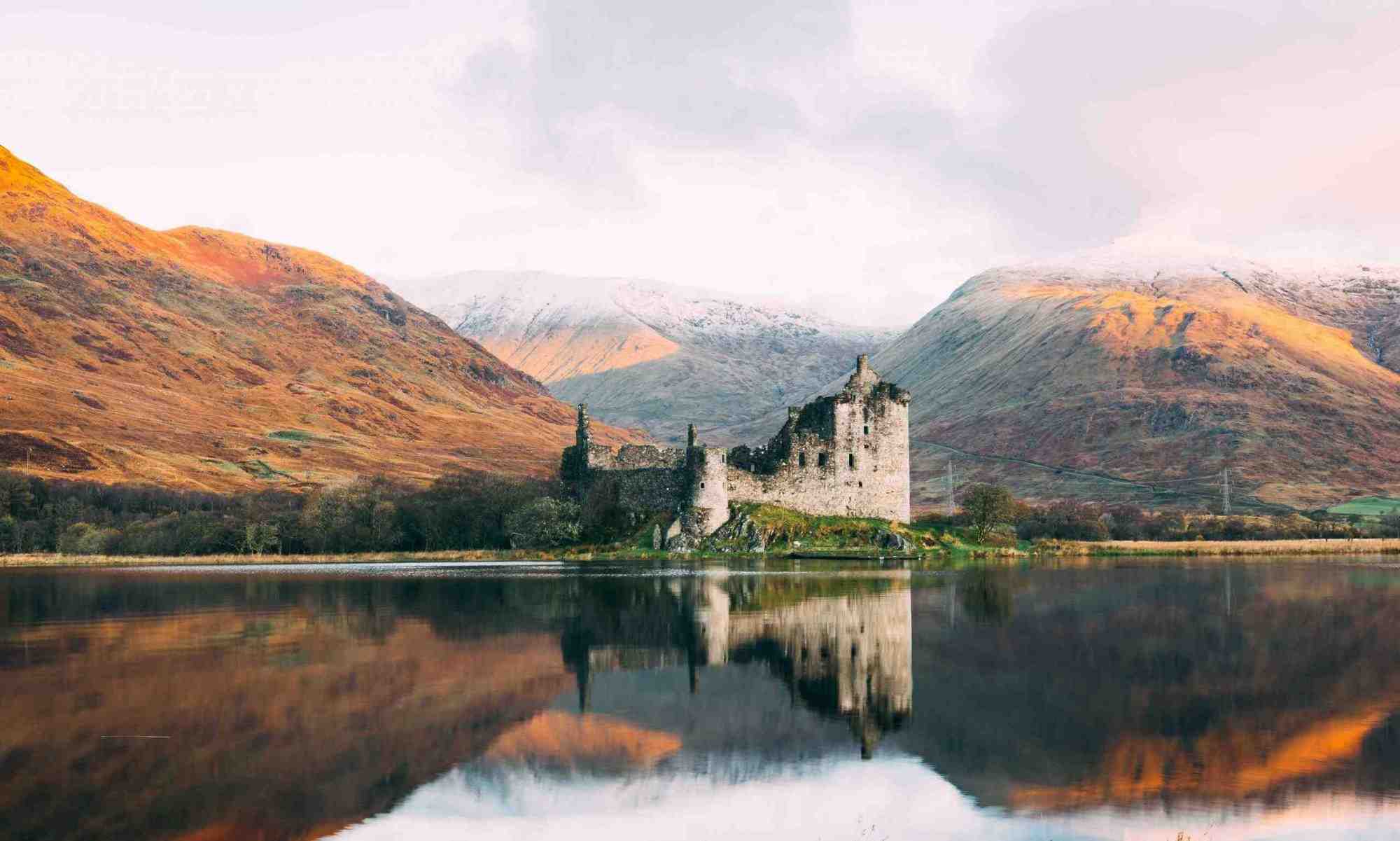
Featured image: standing stones, Kilmartin Glen by diego_cue, CC BY-SA 3.0, via Wikimedia Commons.