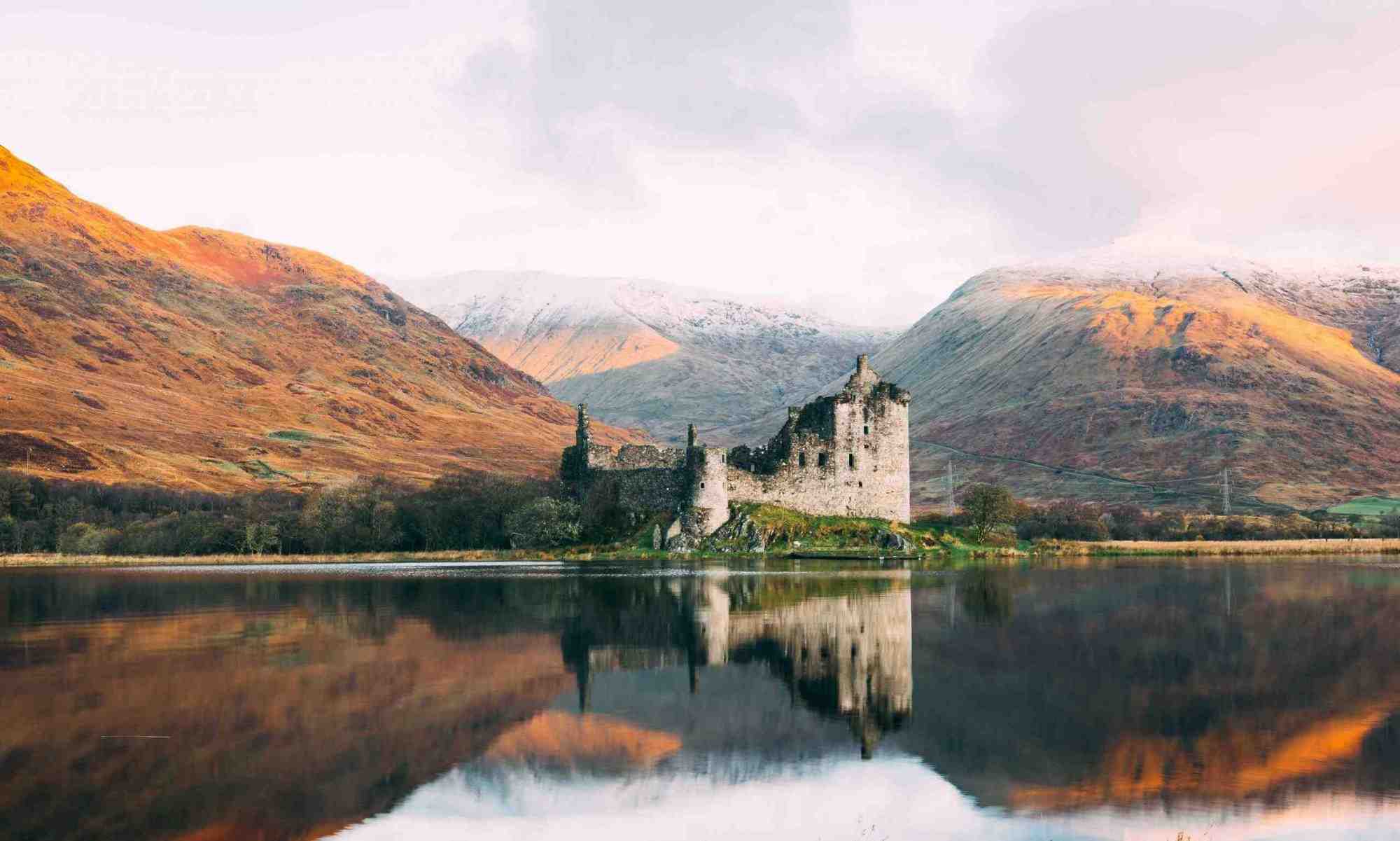


Loch Ness is the most famous stretch of water in Scotland – a deep, dark Highland loch wrapped in legend and ringed by castles, canals and lochside villages. Whether you come hoping to glimpse the monster or simply to cruise beneath brooding hills, this Loch Ness guide covers the best things to do, how to get there and where to stay.
Stretching around 23 miles through the Great Glen, Loch Ness holds more fresh water than all the lakes of England and Wales combined – and at over 200 metres deep, it is easy to see why the mystery endures.
About Loch Ness and the legend
Loch Ness sits along the Great Glen, a geological fault line slicing across the Highlands between Inverness and Fort William. Its peat-stained water is famously murky, which has fuelled centuries of speculation. Reports of a creature date back to the 6th century, but it was a 1933 sighting that turned “Nessie” into a global icon.
How to get to Loch Ness
- From Inverness: the easiest gateway – the north end is about a 25–30 minute drive from the city.
- From Edinburgh or Glasgow: around 3 to 3.5 hours by car, or an easy full-day guided tour.
- By tour: day tours typically combine a cruise with Urquhart Castle.
Top things to do at Loch Ness
Urquhart Castle
The ruined lochside fortress near Drumnadrochit is the postcard image of Loch Ness, with superb views down the loch – one of the best spots for monster-watching.
Loch Ness boat cruises
Getting out on the water is the classic experience. Cruises run from Inverness, Drumnadrochit and Fort Augustus, many with sonar.
Fort Augustus and the Caledonian Canal
At the southern tip, this village is built around a dramatic flight of canal locks where boats are raised and lowered between the loch and the canal.
The Loch Ness Centre
In Drumnadrochit, this attraction tells the story of the loch’s geology, history and decades of monster investigations.
Dores Beach
A pebbly beach at the quieter northern end with a classic long view down the loch.
The Loch Ness Monster story
From St Columba’s 6th-century encounter to the famous (and later disputed) 1934 photograph, the legend of Nessie has drawn researchers, hoaxers and hopeful visitors for generations.
Where to stay at Loch Ness
- Drumnadrochit: central for Urquhart Castle and cruises.
- Fort Augustus: pretty canal-side base at the south end.
- Inverness: the largest choice of hotels and restaurants and a hub for the wider Highlands.
Browse our Scotland accommodation guide.
How big and deep is Loch Ness?
Loch Ness stretches about 23 miles (37 km) along the Great Glen and plunges to depths of around 230 metres, making it the largest body of fresh water by volume in the British Isles – it holds more water than all the lakes of England and Wales combined. Its water is stained dark brown by peat washed in from the surrounding hills, giving near-zero underwater visibility, and it’s so large and deep that it never freezes. Those statistics are a big part of why the monster legend has proved so impossible to disprove.
The best Loch Ness boat cruises
A cruise is the single best way to experience Loch Ness, and several operators run trips from Inverness, Dochgarroch, Drumnadrochit and Fort Augustus. Many boats are fitted with sonar so you can watch the loch bed (and any mysterious returns) scroll past on screen, and most can be combined with a stop at Urquhart Castle. Evening and sightseeing cruises both run in season; book ahead in summer, and bring a warm layer as it’s breezy on deck even on fine days.
Walking and cycling around Loch Ness
The long-distance Great Glen Way runs the length of the loch between Fort William and Inverness, and you can walk superb day sections of it for big lochside views. The quieter South Loch Ness Trail follows the eastern shore, passing the spectacular Falls of Foyers, while cyclists can link Inverness, Dores and Fort Augustus on a mix of paths and quiet roads. These routes show you a calmer, crowd-free side of the loch.
The Loch Ness Monster: legend and science
Tales of a creature in the loch stretch back to the 6th century, when St Columba is said to have turned one away, but modern “Nessie” fever began in 1933 after a new lochside road opened up the views and a string of sightings followed. The famous 1934 “Surgeon’s Photograph” cemented the legend, only to be exposed decades later as a hoax. Since then, sonar sweeps, underwater cameras and even a large-scale environmental DNA survey have searched the depths; no monster has been found, with eels among the more likely explanations – but the mystery, and the fun of looking, endures.
Beyond the loch: nearby attractions
Loch Ness sits at the heart of an exceptional cluster of Highland sights. Combine it with the city of Inverness, the moving battlefield of Culloden, the locks of the Caledonian Canal, and the beautiful, lesser-known Glen Affric. To the south-west, the Great Glen road leads to Fort William and Ben Nevis, while the Cairngorms National Park lies within easy reach to the east.
Day trip or overnight?
Loch Ness works well as a day trip from Inverness or even Edinburgh, but staying overnight lets you explore both shores, enjoy an evening cruise and combine it with nearby Culloden battlefield. It is also the natural starting point for the North Coast 500.
Best time to visit Loch Ness
Loch Ness is a year-round destination, but late spring and early autumn offer the best balance of mild weather, long daylight and thinner crowds, with fewer midges than mid-summer. Summer brings the warmest days, the fullest cruise timetables and near-endless northern light, but also the busiest car parks at Urquhart Castle. Winter is quiet and brooding, with mist often hanging over the water – atmospheric, though some attractions and cruises run reduced schedules, so check ahead.
Loch Ness with children
The loch is a hit with families. Kids love the monster hunt, and a sonar-equipped cruise turns the search into an adventure. The exhibition at Drumnadrochit explains the science and stories in an engaging way, the ruins of Urquhart Castle are great fun to explore, and Dores Beach is an easy spot for a picnic and a paddle. Keep a close eye on little ones near the water, which is deep and cold.
Practical tips for visiting Loch Ness
Set off early to beat the tour-bus crowds at Urquhart Castle, and consider visiting the quieter eastern shore for a more peaceful experience. The west-shore A82 is scenic but busy and winding, so allow plenty of time. Bring layers and waterproofs whatever the forecast, and book cruises and accommodation ahead in peak season. If you’re driving the loch as part of a longer trip, it links seamlessly into the Great Glen between Inverness and Fort William.
Frequently asked questions
Is Loch Ness worth visiting?
Yes – beyond the monster legend, it is a beautiful Highland loch with a superb castle, scenic cruises and easy access from Inverness.
What is the best way to see Loch Ness?
A boat cruise paired with a visit to Urquhart Castle gives you the loch from both the water and a classic viewpoint.
Can you do Loch Ness as a day trip from Edinburgh?
Yes – full-day guided tours run from Edinburgh, though staying near Inverness lets you see much more.
How do you get to Loch Ness?
The simplest route is from Inverness, about 30 minutes’ drive to the north end. Tours and cruises depart from Inverness, Drumnadrochit and Fort Augustus.
Where is the best place to spot the monster?
Urquhart Castle and Dores Beach both offer long, open views down the loch.
How deep is Loch Ness?
About 230 metres at its deepest – deep enough, and dark enough with its peaty water, to keep the monster legend alive.
Can you walk around Loch Ness?
You can’t easily circle the whole loch on foot in a day, but the Great Glen Way and South Loch Ness Trail offer excellent walking and cycling along the shores, including the Falls of Foyers.
Where is the best place to stay at Loch Ness?
Drumnadrochit is the most central base, close to Urquhart Castle and the main cruise departures. Fort Augustus, at the southern end, is a pretty canal-side village, while nearby Inverness offers by far the widest choice of hotels and restaurants and makes an easy hub for the loch and the wider Highlands.
How long do you need at Loch Ness?
A half to full day covers a cruise and Urquhart Castle; staying overnight lets you explore both shores, the Falls of Foyers and Fort Augustus at a relaxed pace.
Heading further north? Loch Ness is the gateway to the North Coast 500. Combine it with Culloden and the wider Highlands guide.
Header image: Wknight94, CC BY-SA 3.0, via Wikimedia Commons