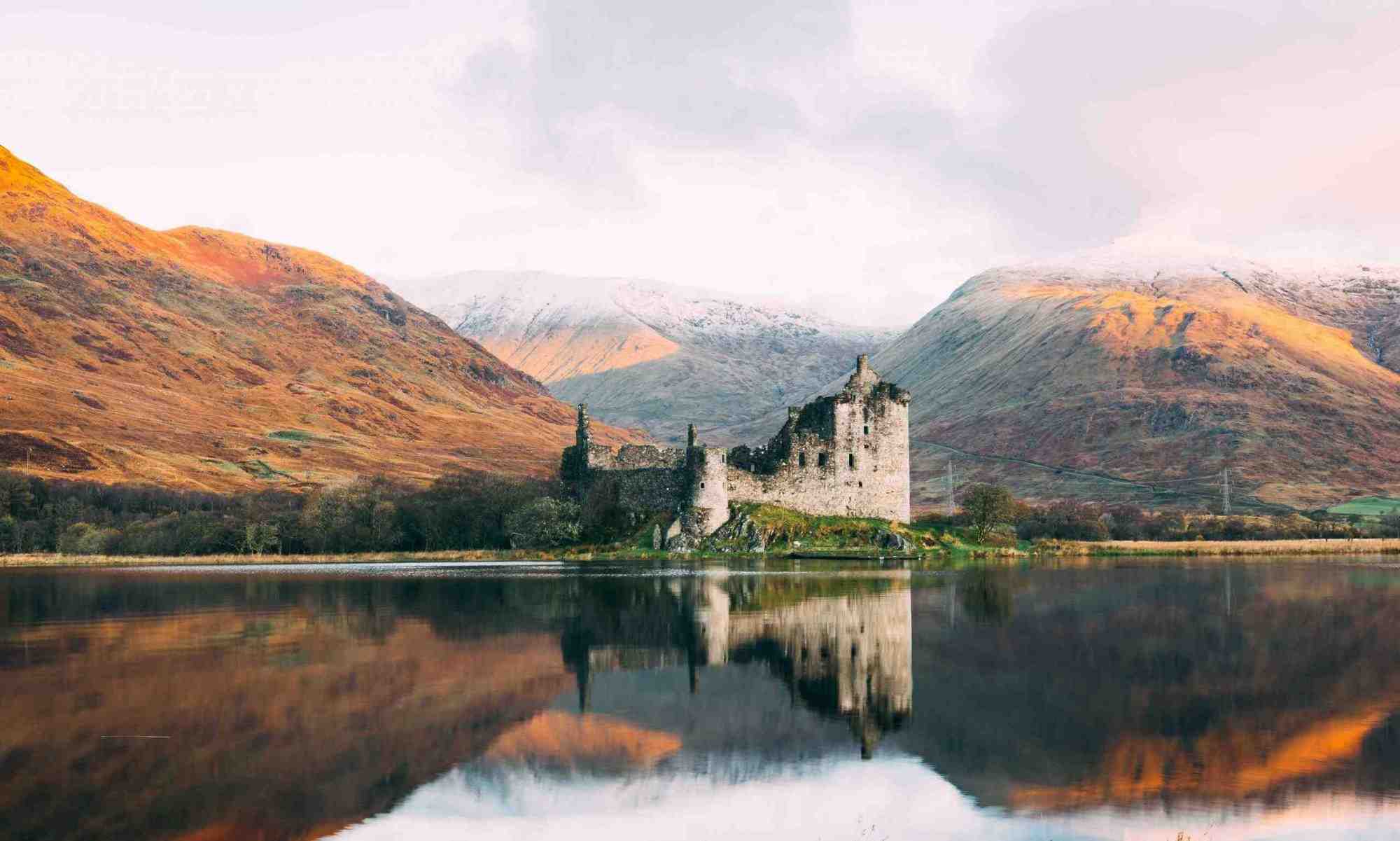


The North Coast 500 is Scotland’s ultimate road trip – a 516-mile loop around the far north Highlands that has been called one of the world’s great coastal drives. Think single-track roads hugging the Atlantic, white-sand beaches, castles, mountains and distilleries. This NC500 guide covers the route, itineraries, the best stops, when to go and how to drive it.
What is the NC500?
Launched in 2015, the North Coast 500 is a signed touring route that starts and ends at Inverness Castle and loops around the northern Highlands – up the east coast, across the wild north, and back down the dramatic west. The full circuit is around 516 miles; most people drive it clockwise.
How many days do you need for the NC500?
- Minimum 3 days – doable but rushed.
- Recommended 5–7 days – time to stop, walk and enjoy the scenery.
- Ideal 7+ days – relaxed pace with detours.
Best time to drive the NC500
May to September offers the longest days and best weather. May and September are the sweet spot – quieter roads, fewer midges and easier-to-find accommodation than peak July–August.
Suggested NC500 itineraries
5-day NC500 itinerary
- Inverness → Black Isle → Dornoch (Dunrobin Castle)
- Dornoch → John o’ Groats → Thurso (Duncansby Stacks)
- Thurso → Durness (Smoo Cave, beaches)
- Durness → Ullapool (Kylesku, Assynt)
- Ullapool → Applecross → Inverness (Bealach na Bà, Torridon)
7-day NC500 itinerary
Add nights in Wick, Lochinver/Assynt and Torridon/Applecross to slow the pace, fit in coastal walks and tour a distillery.
The best stops on the NC500
East coast
- Black Isle – dolphin-spotting at Chanonry Point.
- Dunrobin Castle – a fairy-tale castle near Golspie with falconry displays.
- Wick & Old Pulteney – the harbour town of Wick is home to Old Pulteney, a coastal single malt worth a tour.
North coast
- John o’ Groats & Duncansby Stacks – the famous signpost plus dramatic sea stacks.
- Smoo Cave, Durness – a vast sea cave you can walk into.
- Beaches – the turquoise bays of the far north rival the Caribbean.
West coast
- Kylesku – sweeping bridge and sea-loch views.
- Assynt & Lochinver – surreal lone mountains like Suilven.
- Ullapool – the prettiest town on the route and a great seafood stop.
- Applecross & the Bealach na Bà – Britain’s most dramatic mountain pass (not for nervous drivers).
- Torridon – ancient mountains and one of the Highlands’ most beautiful glens.
Where does the NC500 start?
The route officially begins and ends at Inverness, the capital of the Highlands, which makes it the obvious place to pick up a hire car, stock up on supplies and spend your first or last night. From Inverness the loop heads up the east coast (clockwise) or out to the west (anticlockwise) – most people go clockwise to save the most dramatic west-coast scenery for the second half.
Wildlife, beaches and scenery
The NC500 is a wildlife and landscape spectacular. Watch for bottlenose dolphins at Chanonry Point on the Black Isle, seals and seabirds all along the coast, and red deer and golden eagles in the hills. The far north and west hide some of Britain’s most beautiful beaches – the dazzling white sands of Achmelvich, Clachtoll and remote Sandwood Bay rival the tropics on a sunny day. Inland, surreal lone peaks such as Suilven, Stac Pollaidh and the mountains of Assynt and Torridon create scenery unlike anywhere else in the UK.
Distilleries and food along the route
The NC500 is a treat for food and drink lovers. Whisky fans can tour Old Pulteney in Wick, Clynelish near Brora and Glenmorangie at Tain, while gin lovers can visit distilleries in the far north. Along the way, harbour-side seafood shacks, farm shops and Highland inns serve fresh langoustines, oysters, crab and venison. Stopping to eat well is part of the pleasure – just remember that options thin out in the remotest stretches, so don’t set off hungry.
Campervan or car?
The NC500 is hugely popular with campervans, and for good reason – the freedom is wonderful. But the route’s narrow, single-track roads weren’t built for heavy traffic, so drive considerately: use passing places, let queues of cars overtake, never block them, and only stay overnight at designated sites or with the landowner’s permission rather than parking up anywhere. A standard car with pre-booked accommodation is often the more relaxed (and local-friendly) way to do it.
Budgeting and booking
Accommodation is the NC500’s biggest cost and constraint – rooms in the far north are limited and book up months ahead in summer, so reserve early and expect to pay a premium in peak season. Build in a fuel budget too, as prices rise the further north you go and stations are sparse. Travelling in May, June or September generally means better availability, lower prices and quieter roads than July and August.
Where to stay along the NC500
Accommodation is limited and books up fast – reserve well ahead. Inverness, Dornoch, Wick, Ullapool and Lochinver have the widest choice. See our Scotland accommodation guide.
NC500 driving tips and etiquette
- Single-track roads: use passing places to let oncoming and faster traffic pass – never park in them.
- Fuel & EV charging: stations are sparse in the far north – plan ahead.
- Drive unhurried: the roads demand attention; build in plenty of time.
- Leave no trace: take litter home and respect crofting communities.
NC500 highlights you shouldn’t miss
With so much to see, it helps to know the absolute must-stops. If time is tight, prioritise:
- Bealach na Bà – the hair-raising hairpin pass to Applecross, the route’s signature drive.
- Smoo Cave – a vast sea cave near Durness you can walk and boat into.
- Duncansby Stacks – dramatic sea stacks near John o’ Groats, better than the signpost itself.
- Dunrobin Castle – a fairy-tale castle with falconry displays on the east coast.
- Achmelvich and Clachtoll – some of Scotland’s most beautiful white-sand beaches.
- Corrieshalloch Gorge – a spectacular wooded canyon and waterfall near Ullapool.
- Kylesku and Assynt – sweeping bridge views and surreal lone mountains.
Is the NC500 right for you?
The NC500 suits anyone comfortable with a multi-day road trip and confident driving on narrow, winding and single-track roads – nervous drivers may find the busiest sections and the Bealach na Bà stressful. It’s wonderful for couples, friends and families who enjoy scenery, beaches, history and the outdoors, though the long daily drives can test very young children, so build in plenty of beach and play stops. Above all it rewards an unhurried pace: see less, but see it properly.
How to get to the start of the NC500
Since the route begins in Inverness, getting there is your first task. By car, Inverness is around 3.5 hours from both Edinburgh and Glasgow on the A9. If you would rather not drive the whole way, take a direct train or the overnight Caledonian Sleeper to Inverness and pick up a hire car there, or fly into Inverness Airport. Booking your hire car well ahead is wise in summer, when demand from NC500 road-trippers is high and vehicles sell out fast.
Frequently asked questions
How many days do you need for the NC500?
Five to seven days is ideal. Three is the bare minimum.
Should you drive the NC500 clockwise or anticlockwise?
Most drive it clockwise (east coast first), saving the spectacular west coast for the second half.
What is the best time of year to drive the NC500?
May and September offer long days, quieter roads and fewer midges than mid-summer.
Is the NC500 hard to drive?
Much of it is straightforward, but expect single-track roads and one serious mountain pass (the Bealach na Bà). Drive unhurried and you will be fine.
Where does the NC500 start and end?
The official start and finish is Inverness Castle.
How much does the NC500 cost?
It varies widely with season and style, but accommodation and fuel are the main expenses. Booking early and travelling in the shoulder seasons keeps costs down; camping or campervanning is cheaper than hotels.
Can you do the NC500 in a campervan?
Yes, and many do – just drive considerately on the single-track roads, use passing places, and stay only at proper sites or with permission rather than parking anywhere overnight.
Is the NC500 worth it?
For lovers of dramatic coastal scenery, beaches, history and the outdoors, absolutely – it is one of the world’s great road trips. Just allow enough time, drive courteously on the single-track roads, and book ahead so the logistics never get in the way of the views.
Is the NC500 suitable for families?
Yes, with planning – break up the driving with beaches, castles and wildlife stops, keep daily distances modest, and book family-friendly accommodation early.
What should you pack for the NC500?
Layers and waterproofs, midge repellent in summer, offline maps (signal is patchy), a reusable water bottle, snacks for remote stretches, and good footwear for short coastal and hill walks.
The NC500 begins where Loch Ness ends – combine the two, and pair with the Isle of Skye. See our full Highlands guide.
Header image: Anne Burgess, CC BY-SA 2.0, via Wikimedia Commons