
Last updated: June 2026
Scotland’s lochs are the soul of its landscape — mirror-still waters cradled by mountains, dotted with islands and steeped in legend. The country has more than 30,000 of them, from vast, brooding expanses to tiny lochans high in the hills. This guide to the most beautiful lochs in Scotland gathers the ones no visitor should miss, along with how to make the most of them.
First, a quick note on the word: in Scotland, “loch” covers both freshwater lakes and sea lochs (inlets of the sea). Both can be breathtaking, and several of the most famous below are freshwater giants carved out by ancient glaciers.
How Scotland’s lochs were formed
Most of Scotland’s freshwater lochs are a legacy of the last Ice Age. As vast glaciers ground their way across the land tens of thousands of years ago, they gouged out deep, steep-sided basins that later filled with meltwater. This is why so many lochs are long, narrow and astonishingly deep. Some, like Loch Ness, also follow ancient geological fault lines: Loch Ness, Loch Oich and Loch Lochy sit in a dead-straight line along the Great Glen, a colossal fracture that splits the Highlands from coast to coast and is now linked by the Caledonian Canal. Understanding this glacial and geological history adds a whole extra dimension to standing on a lochside, gazing into water that has been gathering in these hollows since the ice retreated.
Loch Ness
The most famous loch in the world needs little introduction. Loch Ness holds more water than every lake in England and Wales combined, its peat-dark depths plunging over 200 metres — the perfect hiding place, legend has it, for a certain monster. Beyond the Nessie hunt, the loch is genuinely beautiful, best appreciated on a cruise or from the ramparts of Urquhart Castle on its western shore. The pretty village of Drumnadrochit makes a good base, while Fort Augustus at the southern end is a lovely spot to watch boats climb the flight of locks on the Caledonian Canal.
Loch Lomond
The largest stretch of fresh water in Great Britain by surface area, Loch Lomond is a firm favourite thanks to its island-studded waters and easy access from Glasgow. Climb Ben Lomond for the classic view, cruise between the wooded islands, or simply enjoy the “bonnie banks” immortalised in song. As the centrepiece of Scotland’s first national park, it is the gateway to the Highlands for many visitors.
Loch Katrine
Hidden in the heart of the Trossachs, Loch Katrine is a serene beauty that inspired Sir Walter Scott’s poem “The Lady of the Lake”. Cruise its calm waters aboard the century-old steamship that bears the writer’s name, or cycle and walk the traffic-free shoreline road. So pure is the water that it has supplied Glasgow’s drinking water since Victorian times.
Loch Awe
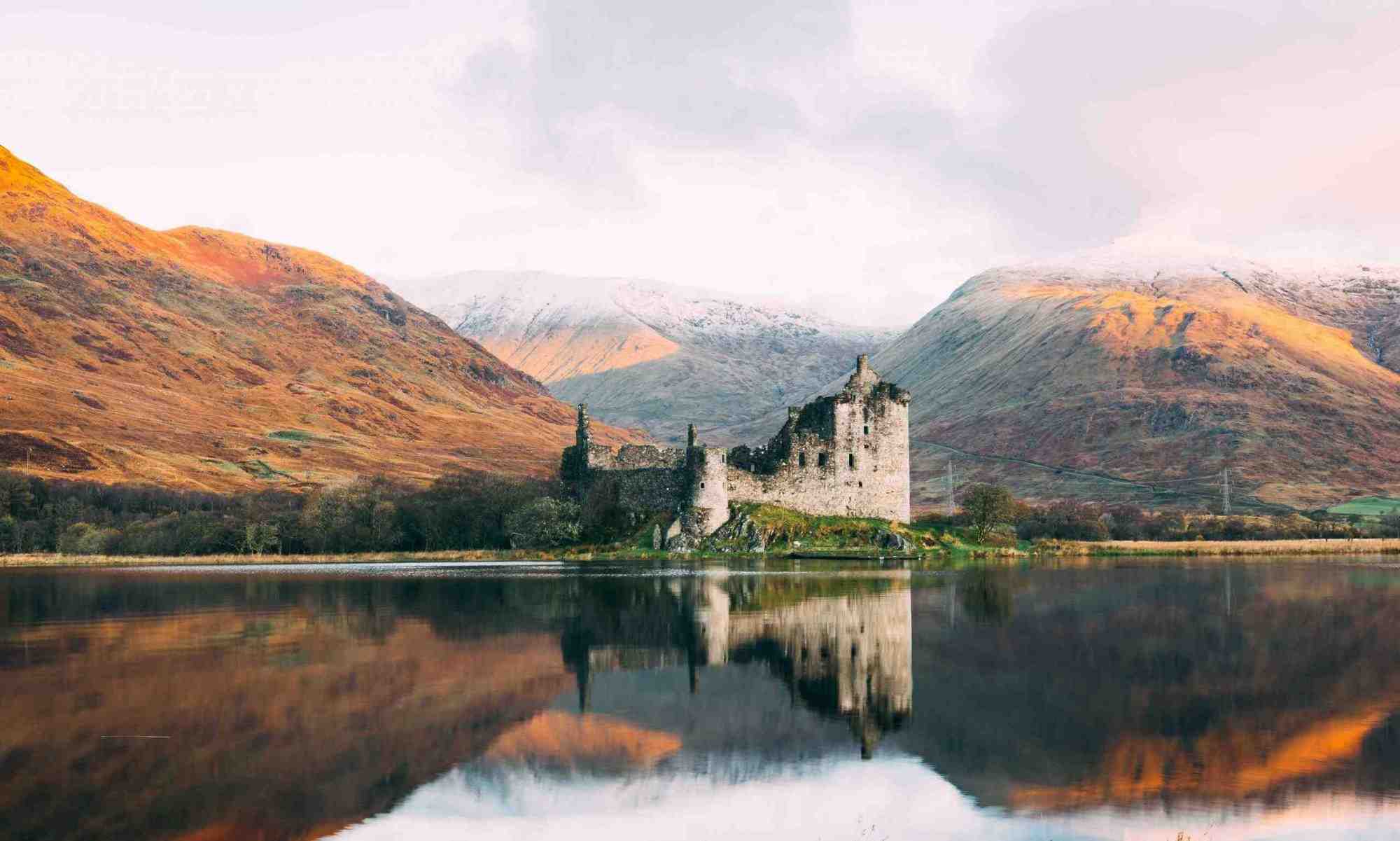
One of the longest freshwater lochs in Scotland, Loch Awe in Argyll stretches for some 25 miles through gentle, wooded countryside. Its star attraction is the romantic ruin of Kilchurn Castle, whose reflection in the still water is one of the most photographed scenes in the Highlands. The loch is also a renowned spot for trout and salmon fishing.
Loch Shiel and Glenfinnan
Framed by mountains and presided over by the Jacobite monument at its head, Loch Shiel at Glenfinnan is pure Highland drama. Film fans will recognise its waters as the “Black Lake” of Hogwarts in the Harry Potter films, and the nearby viaduct carries the Jacobite Steam Train — the Hogwarts Express — across the glen. It is one of the most cinematic spots in the country.
Loch Maree
Remote and ravishing, Loch Maree in Wester Ross is widely regarded as one of Scotland’s most beautiful. Scattered with wooded islands and watched over by the great bulk of Slioch mountain, its shores are cloaked in some of the last surviving fragments of ancient Caledonian pine forest. It is a highlight of the north-west and within reach of the North Coast 500.
Loch Morar and Loch Morlich
For superlatives, head to Loch Morar near Mallaig — the deepest freshwater body in Britain, plunging more than 300 metres, with its own monster legend to rival Nessie. For something altogether more playful, Loch Morlich in the Cairngorms has a sandy beach backed by mountains, where you can paddleboard, kayak or simply swim with a Highland panorama as your backdrop.
Loch Coruisk on Skye
Perhaps the most dramatic of all, Loch Coruisk lies in a glacial bowl deep among the jagged Black Cuillin on the Isle of Skye. Reached by a small boat from Elgol or a challenging hike, this remote, brooding loch feels like the edge of the world — a reward for those willing to make the effort to reach it. The boat trip across from Elgol is an adventure in itself, often passing seals and seabirds along the way.
Loch Tay and Loch Leven
In the southern Highlands, Loch Tay stretches beneath Ben Lawers in Perthshire, its shores rich with history — you can visit a reconstructed Iron Age crannog (a loch-dwelling on stilts) and explore the pretty villages of Kenmore and Killin at either end. Further north-west, Loch Leven — the sea loch at the mouth of Glencoe — offers a gentler counterpoint to the glen’s brooding peaks, with a flat, family-friendly trail around its shore and superb mussels served at its lochside inns. Together they show just how varied Scotland’s lochs can be, from historic inland waters to tranquil sea inlets.
Legends and folklore of the lochs
Scotland’s lochs have always been places of mystery, and few are without a story. The most famous is, of course, the Loch Ness Monster, affectionately known as Nessie, whose alleged sightings stretch back over a thousand years to the time of St Columba. But deep Loch Morar has its own beast, Morag, said to appear before a death in the local clan. Beyond specific monsters, lochs feature heavily in Highland folklore as the haunt of the kelpie — a shape-shifting water horse that lured unwary travellers to a watery end, immortalised today in the giant steel Kelpies sculptures near Falkirk. Whether or not you believe a word of it, there is no denying that a still, dark loch at dusk has a way of making the old tales feel surprisingly plausible.
Things to do on Scotland’s lochs
The lochs are not just for looking at. Depending on where you go, you can:
- Take a cruise — Loch Ness, Loch Lomond and Loch Katrine all have regular sightseeing boats.
- Paddle — kayaking, canoeing and paddleboarding are superb on calmer lochs like Morlich and Lomond.
- Wild swim — increasingly popular, though the water stays cold year-round, so go prepared.
- Fish — many lochs are famous for trout, salmon and pike; check local permits.
- Walk and cycle — shoreline paths and long-distance routes hug many of the most scenic lochs.
Tips for visiting the lochs
A few things to keep in mind:
- Go early or late for the stillest water and best reflections — and the best chance of avoiding crowds at the famous spots.
- Bring midge repellent in summer; lochside spots can be midgy on still, damp evenings.
- Respect the water. Lochs are cold and often deep — take care if swimming or paddling, and check conditions.
- Follow the Scottish Outdoor Access Code and leave no trace.
Fit the lochs into your trip
Scotland’s lochs are so plentiful that you’ll pass dozens on any road trip. Our 7-day Scotland itinerary takes in Loch Lomond, Loch Shiel and Loch Ness, while the NC500 itinerary threads past the wild lochs of the north-west. Combine a cruise, a paddle and a few lochside walks for a trip that captures the very best of Scotland’s watery landscapes.
Frequently asked questions
What is the most beautiful loch in Scotland?
It is endlessly debated, but Loch Maree, Loch Shiel and Loch Lomond are frequent favourites. For sheer fame and atmosphere, Loch Ness is unbeatable; for dramatic mountain scenery, Loch Coruisk on Skye takes some beating.
What is the difference between a loch and a lake?
“Loch” is simply the Scottish (and Gaelic) word for a lake, and it covers both freshwater lochs and sea lochs. Scotland has only one body of water officially called a “lake” — the Lake of Menteith.
Can you swim in Scottish lochs?
Yes, wild swimming is popular and permitted in most lochs, but the water is cold all year and some lochs are very deep. Enter gradually, never swim alone, and consider a wetsuit outside the warmest months.
What is the deepest loch in Scotland?
Loch Morar, near Mallaig on the west coast, is the deepest freshwater loch in Scotland and in all of Britain, reaching depths of more than 300 metres. Loch Ness holds the greatest volume of water thanks to its enormous length and depth combined.
Want more? Explore our guides to Loch Ness, Loch Lomond and the Cairngorms to plan a trip around Scotland’s most beautiful lochs.