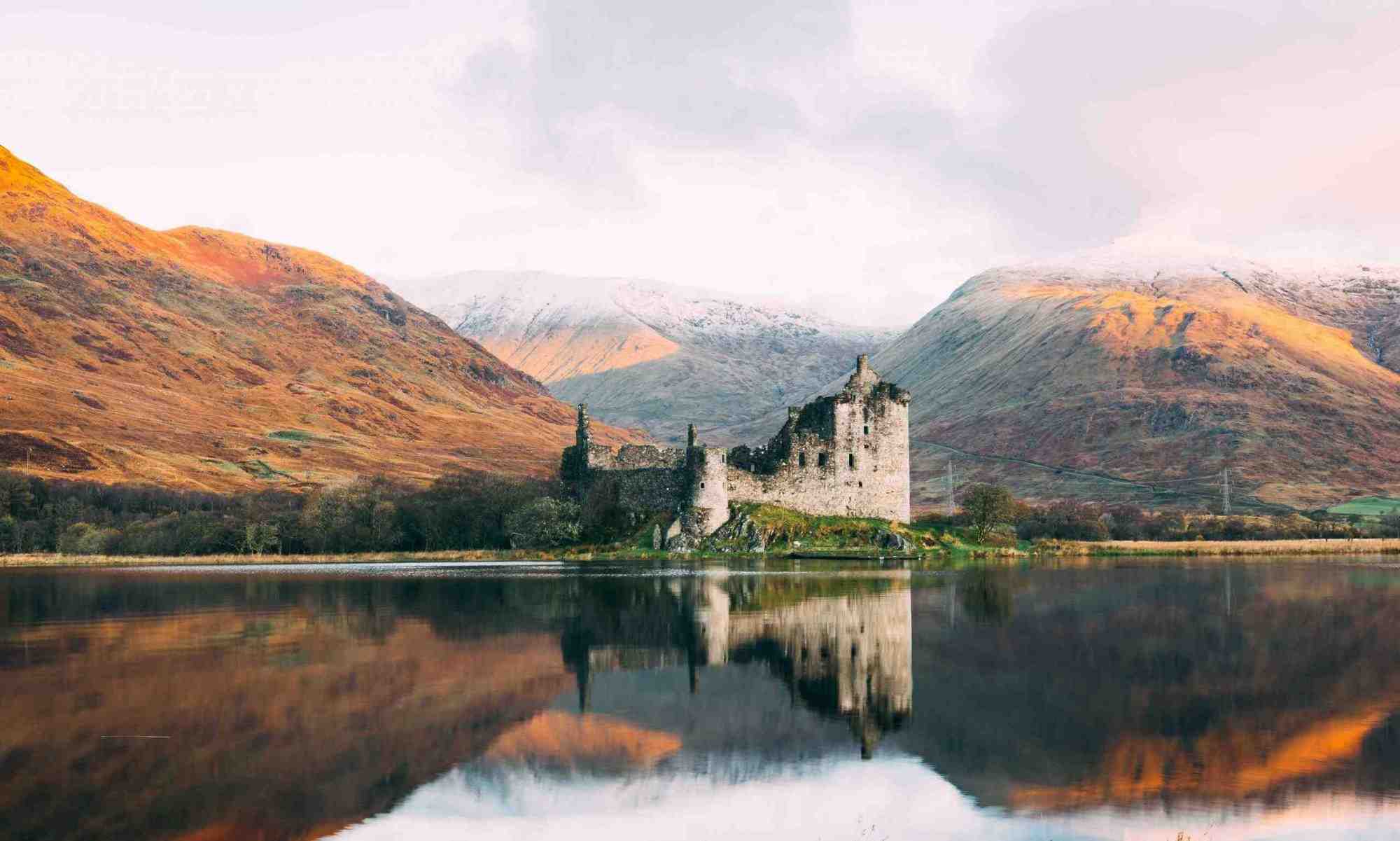

You do not need a car to experience the best of Scotland. Between a genuinely scenic rail network, long-distance coaches, city trams and the ferries that stitch the islands together, it is perfectly possible to reach Edinburgh, the Highlands and the Hebrides entirely by public transport. This Scotland without a car guide explains how to get around and lays out a relaxed week-long car-free itinerary.
Getting around Scotland without a car
Scotland’s public transport is better than many visitors expect, especially between the main towns and cities:
- Trains (ScotRail): fast, frequent services link Edinburgh, Glasgow, Stirling, Perth, Inverness, Aberdeen and Fort William. Two routes — the West Highland Line to Mallaig and the line to the Kyle of Lochalsh — are among the most scenic rail journeys in the world.
- Coaches (Scottish Citylink & Megabus): reach places the train does not, including Skye, Oban, the NC500 towns and much of the Highlands, usually cheaply.
- Ferries (CalMac): connect the mainland to the islands — Skye, Mull, Iona, Arran, Lewis and Harris and more — with foot-passenger fares that are inexpensive.
- Cities: Edinburgh has trams and buses (and is very walkable); Glasgow has the UK’s only city Subway.
- Guided day tours: for remote spots such as the Isle of Skye, Loch Ness or the NC500, small-group tours run from Edinburgh, Glasgow and Inverness — ideal for reaching places with limited timetables.
A 7-day Scotland itinerary without a car
Days 1–2: Edinburgh
Start in Edinburgh, easily reached by train or tram from the airport. The city is compact and walkable — Edinburgh Castle, the Royal Mile, Arthur’s Seat and the New Town are all on foot. Spend two nights here to settle in.
Day 3: Glasgow (or Stirling)
Take the frequent 50-minute train to Glasgow for its museums, music and architecture — or stop at Stirling to see the castle and the Wallace Monument. Both are easy day trips or overnight stops.
Day 4: The West Highland Line to Fort William
Ride one of the world’s great railway journeys from Glasgow to Fort William, skirting Loch Lomond and crossing Rannoch Moor. Fort William sits beneath Ben Nevis and makes a superb Highland base reachable entirely by rail.
Day 5: Glenfinnan and the road to the isles
Continue by train towards Mallaig, crossing the Glenfinnan Viaduct (of Harry Potter fame) — in summer the Jacobite steam train runs this route. From Mallaig, a short CalMac ferry crosses to the Isle of Skye.
Day 6: Isle of Skye
Base yourself in Portree and join a small-group tour to reach Skye’s scattered highlights — the Old Man of Storr, the Quiraing and the Fairy Pools — which are hard to see by bus alone. Skye is also reachable directly by Citylink coach from Glasgow and Inverness.
Day 7: Inverness & Loch Ness
Head to Inverness, the Highland capital, by coach or via the scenic Kyle of Lochalsh line. From here, cruises and bus tours run to Loch Ness and Urquhart Castle. Frequent trains return you to Edinburgh or Glasgow to complete the loop.
Exploring the islands by ferry
If you have longer, CalMac ferries open up the Hebrides on foot. Popular car-free island trips include Arran (from Ardrossan), Mull and Iona (from Oban), and Lewis and Harris (from Ullapool). Island buses meet most ferries, and many islands are wonderful for cycling.
Tips for car-free travel in Scotland
- Consider a rail pass. The Spirit of Scotland Travelpass covers trains, many ferries and some coaches over 4 or 8 days and can be excellent value.
- Book ahead. Advance train tickets and popular tours (especially Skye) sell out in summer and are cheaper booked early.
- Check timetables. Rural bus and ferry services can be sparse, particularly on Sundays — plan connections in advance.
- Travel light. You will be moving between trains, buses and ferries, so a single manageable bag makes life easier.
- Use the cities as bases. Day tours from Edinburgh, Glasgow and Inverness reach the Highlands and Loch Ness without an overnight stay.
Is it worth hiring a car instead?
A car gives more freedom for remote glens and the far north-west, but it is not essential — and it saves you the cost of hire, fuel and parking. If you do decide to drive, read our guide to driving in Scotland. Otherwise, pair this guide with our other Scotland itineraries and our trip-planning guide.
Frequently asked questions
Can you visit Scotland without a car?
Yes. Edinburgh, Glasgow, Stirling, Fort William, Inverness, Oban and the Isle of Skye are all reachable by train, coach or ferry, and guided day tours cover the more remote sights.
What is the best way to get around Scotland without a car?
A combination of ScotRail trains between cities, Scottish Citylink coaches to the Highlands and islands, and CalMac ferries to the isles — supplemented by small-group tours for hard-to-reach spots.
Can you get to the Isle of Skye by public transport?
Yes — by Citylink coach from Glasgow or Inverness, or by train to Mallaig and the ferry to Armadale. Once on Skye, day tours from Portree reach the main sights.
Can you visit Loch Ness without a car?
Easily. Buses and boat cruises to Loch Ness and Urquhart Castle run regularly from Inverness, which is well connected by train.
How many days do you need to see Scotland by public transport?
About a week lets you combine Edinburgh, the Highlands and Skye at a comfortable pace. Add more days for the islands or the north.